
Home › Health › Foot Health
Why Bunions Tend to Get Worse Over Time, and a Simple At-Home Habit That Can Ease the Ache
Most people treat the bump. Here is what is happening around the big-toe joint, and why a gentle daily stretch is becoming a go-to routine for people who want relief without giving up their evenings.

If you have a bunion, you probably know the routine. The joint aches after a long day, certain shoes are off-limits, and every year the bump seems a little more noticeable.
What most people are never told is that the bump itself is only the most visible part of the story.
What is actually going on at the big-toe joint
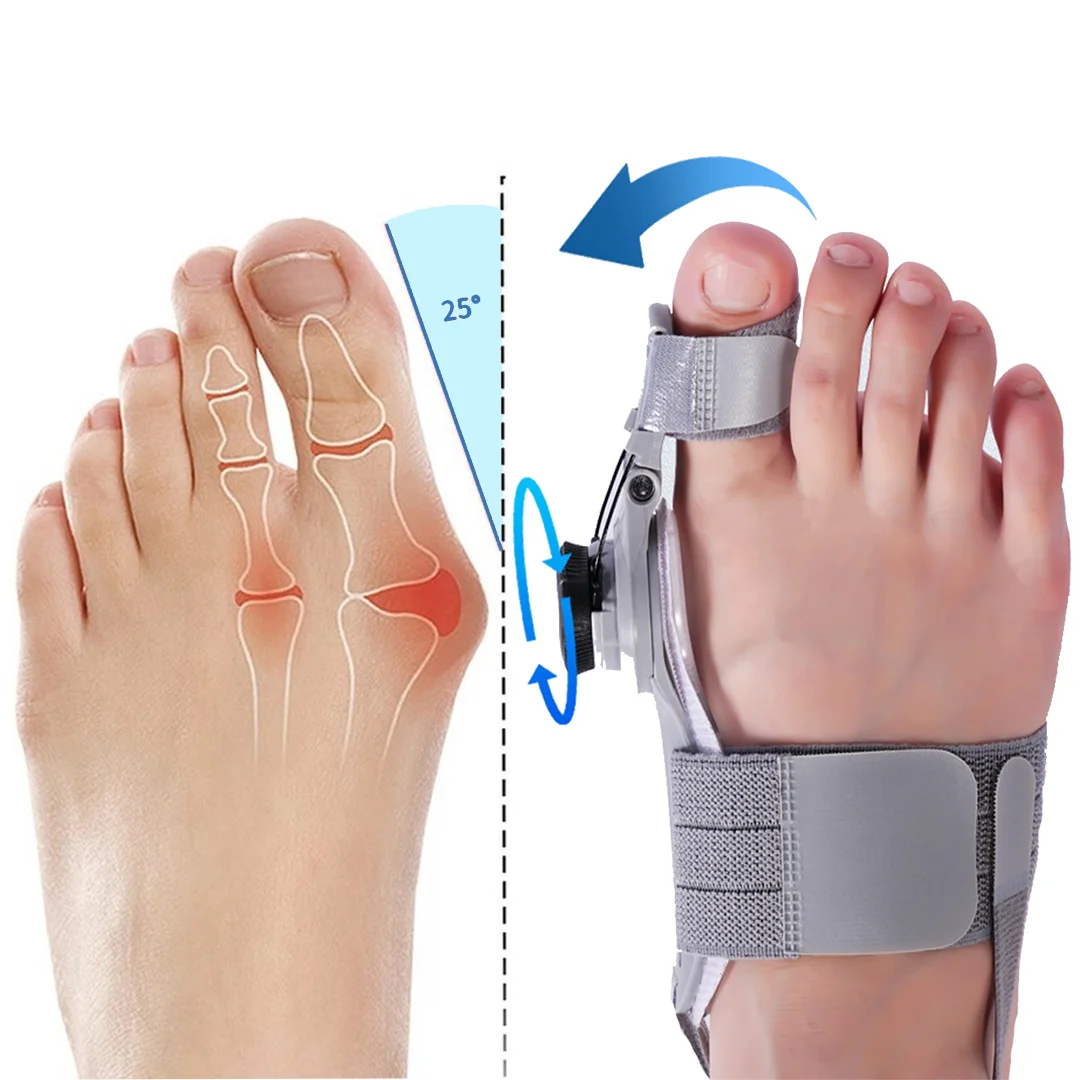
A bunion (hallux valgus) forms when the big toe gradually drifts toward the smaller toes and the joint at its base is pushed outward.
Think of the big toe as being held in place by a balance of forces. Muscles and tendons on the inner side keep it pointing straight ahead. Muscles on the outer side pull it inward. Narrow toe boxes, high heels and hours on your feet can tip that balance, year after year, until the toe settles into a new, angled position.
Once that happens, the soft tissues adapt to the new angle. The outer side becomes tight and short, the inner side becomes stretched and weak, and the joint feels it every time you take a step.
Why the usual fixes often feel disappointing
The most common advice is reasonable: wear wider shoes, use a cushion over the bump, try a silicone toe spacer. These can take the edge off, and wider shoes in particular are worth it.
But most of them only do one thing. A pad protects the bump. A spacer separates the toes while you are standing. Very few of them give the tight tissues a gentle, sustained stretch in the opposite direction, which is the part many people are missing.
For severe bunions, surgery can be the right answer, and a podiatrist is the person to judge that. For many people, though, the goal is simpler: less aching, more comfort, and a routine that helps keep things from getting worse.
The idea behind a hinged corrector
A hinged bunion corrector is designed to do one job well: hold the big toe in a straighter position for a period of time while you are resting.
Instead of a rigid splint that squeezes at one fixed angle, a hinge lets you choose how much stretch you want. Start gently, and increase it as your foot gets used to it. Because you wear it while sitting or sleeping, it fits into time you already spend on the sofa or in bed.
People who use one regularly typically describe three things:
- A feeling of release around the joint during and after a session
- Less end-of-day aching once it becomes a habit
- More comfort in everyday shoes, especially when combined with roomier footwear
It is not a miracle, and it does not reshape bone. It is a simple, low-cost way to give your foot a daily stretch it is not getting anywhere else.
How to fit it into your day
- Put it on while you watch TV, read or wind down in the evening.
- Set the hinge to a gentle stretch. You should feel tension, never sharp pain.
- Begin with 20 to 30 minutes, then build up to longer sessions or overnight wear.
- Pair it with comfortable, wider shoes during the day.
Consistency matters more than intensity. A comfortable session every day does more than a forceful one once a week.
Who should check with a doctor first
If you have diabetes, circulation problems, numbness in your feet, an open wound, or you have recently had foot surgery, talk to your doctor before using any corrector.
Why we made the Healthycorner Bunion Corrector
We wanted something simple: adjustable, comfortable enough to wear for a whole evening, fitting either foot, and priced so that trying it is an easy decision.
Every order ships free and comes with our 30-day money-back guarantee, so you can try it at home and decide for yourself.
This page is an advertisement from Healthycorner. This product is not a medical device and is not intended to diagnose, treat, cure or prevent any disease. Results vary from person to person. Consult a healthcare professional for any medical concern.